Comparison
Creatify casts a shot. Lollipop generates one.
Creatify is built on a library of AI actors and a catalogue it advertises as more than 200 ad templates, rather than on generating footage for each shot. Lollipop works the other way round: a format decides the rules, and every shot in the ad is generated against them. Which of those you want depends on whether a person delivering a script is the whole ad.
What does Creatify give you for the money?
Creatify publishes two self-serve plans: Starter at $39 a month with 100 credits and 300 AI actors, and Pro at $99 a month with 300 credits and 1,500 AI actors.
Before that there is a real free tier, and it is more generous than ours. Creatify’s free plan includes 10 credits a month, enough for up to 2 video ads, and its exports carry a watermark.
Lollipop has two self-serve plans: Pro at $99 a month and Scale at $249 a month. Every new account starts with 4,000 credits.
Brief the same product both ways and look at the two cuts.
Make an ad and compareEvery new account starts with 4,000 credits.
So what is the actual difference?
Creatify’s ladder starts below ours and tops out where ours begins. Its Pro plan is $99 a month. That is what our entry plan costs, and the difference is what a shot is.
Picking a format in Lollipop is not filling in a template: each of the 21 formats ships its own scripting agent, its own scene agent and its own visual rules, and generation is bound by them. A format is not a look you apply at the end. It decides who is on camera, what the room is, whether there is any B-roll at all, and whether authored on-screen text is even permitted.
That is why the library contains things a cast-and-template pipeline has no way to reach. Claymation is Lollipop’s clay stop-motion ad format: sculpted plasticine characters on a handmade tabletop miniature set, with fingerprints and tool marks left in the clay. There is no actor to pick, because there is no person.
Underneath all of it, Lollipop generates video through 24 different video models.
| Tool | Where a shot comes from | Where the person comes from | Agent connector |
|---|---|---|---|
| Lollipop | Generated for this ad, per shot | An actor generated and cast per ad. | Included on every plan |
| Creatify | Assembled from templates and a cast library | Picked from its library of AI actors. | A feature of its top self-serve plan |
Where does Creatify put its paywall?
Creatify’s MCP server is a feature of its $99 a month Pro plan, and its API is a further separate subscription starting at $99 a month.
Ours is not a tier. You can connect Lollipop to your own Claude and make ads from inside it, over an OAuth connection at mcp.lollipopads.ai. That said, an agent connector is normal in this category rather than rare. Creatify, Arcads, Higgsfield and HeyGen all publish an MCP server, and HeyGen’s works on every plan including its free one. Which tier it sits behind is a pricing decision, not a capability. Connecting an ad pipeline to Claude and briefing an ad from the chat walks through what that actually looks like.
When is Creatify the better buy?
When a person delivering a script is the ad, and you want a lot of them. A large library of performers you can page through is a genuinely different proposition from an actor generated per ad, and if your creative testing is mostly swapping the face and the hook, picking beats generating. Their template count is also larger than our format count, and having any free tier at all is a real advantage over not having one, even with a watermark on the way out.
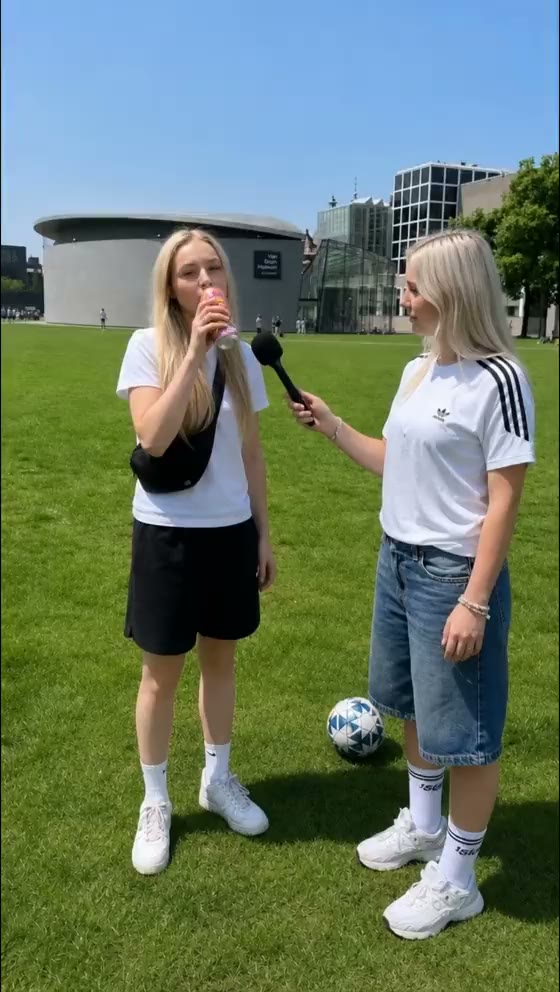
Where it stops being the right shape is when the ad is not a person talking. A vox pop with four strangers, a claymation sketch, a whiteboard argument drawn one mark at a time: those are not a performer plus a template, they are a set of rules about what the picture may contain. The full library of ad formats and what each is for is the honest way to decide which side of that line your product sits on.
If an actor library is what you want, Creatify is not the only one worth pricing. Arcads sells the same shape and does not publish its price, which is worth knowing before you spend an afternoon on a trial.
What we could not check, and what we get wrong
- Creatify’s multi-scene behaviour is not assessed here.A Creatify feature page we tried to read is no longer served, so nothing above claims anything about how Creatify assembles multiple shots. If that is what you are buying on, ask them rather than reading us. If that is the feature you are buying on, ask them rather than reading us.
- Nobody ran the two products side by side. Everything above is read off published pages, on 25 August 2026. Prices in particular move.
- Lollipop refuses things a template would happily fake. If you supply no screen recording, a SaaS demo ad has no product shots in it at all, and Lollipop treats that as the correct output rather than a degraded one. That is a constraint you are buying, and some people do not want it.
- We make one of these two. Which is why every Creatify fact above names the page it was read from, and why the section on agent connectors says they are table stakes rather than implying ours is special.
Where does a library of actors stop being the answer?
At the point where the performance is the product rather than the face is. In a Comedy Skit the product has to be load-bearing: take it out and the scene’s logic breaks. And where the credibility is meant to come from staging rather than from looking like a customer, the crew-lit expert talking head is the deliberate opposite of scrappy phone-shot UGC. Neither is a casting problem.
Start an ad and see what a format decides for you.
Make an ad and compareDescribe the product in a chat. Lollipop writes the script, casts the actor and renders every shot, and you can open the canvas to change any of it.