Ad format
Five strangers agreeing is a different argument from one testimonial
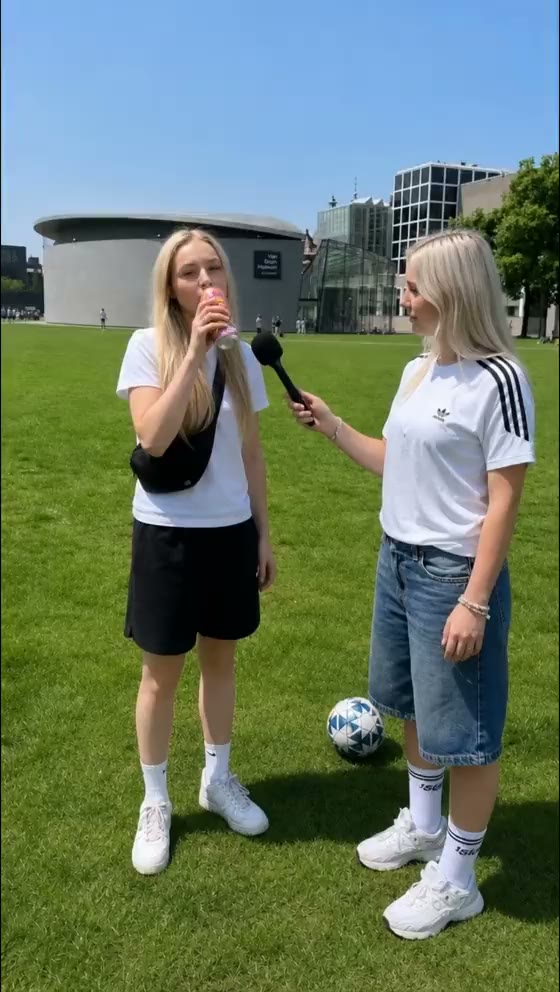
Street Interview is Lollipop’s vox pop format. One recurring host with a visible handheld mic stops a series of strangers on a single real street, and each stranger answers in their own shot. Every frame is the same afternoon, the same weather and the same light, and nobody looks at the lens except the host on the closing ask.
What is a vox pop actually selling?
Consensus, not endorsement. One person praising a product is a testimonial; several separate strangers landing on the same reaction back to back is a different claim, and it is the one this format is shaped to make. Varied ages and voices are part of the argument rather than decoration.
Avoid it when the product needs guided explanation, when there is no visible or tastable moment a stranger could react to on camera, or when the brief wants a single trusted presenter. A crowd cannot explain a mechanism.
Why does the whole ad have to be one afternoon?
Because the illusion is fragile in a very specific way. Sun direction, shadow length and colour temperature have to be identical in every shot, so Lollipop emits one outdoor street environment shared by every scene rather than a location per interviewee. Golden hour in one answer and midday in the next reads as a composite, and the consensus goes with it.
The street itself has to keep reading, too. Shopfronts, traffic and pedestrians moving behind whoever is talking are what make the shot a vox pop. Crop a single tight enough that only the face is left and the ad could have been filmed anywhere.
The mic is a continuity check you can run per frame
In a host single or a two-shot the handheld mic is visible in the host’s hand and angled toward whoever is speaking. In an interviewee single it is entirely out of frame, and no hand or sleeve reaches in holding it. That rule is checkable on a still, which is why it is written that way.
How many people can be in one of these?
The cast is capped at 5 on-camera people, one host and up to four interviewees, and most interviewees appear in exactly one scene.
The cap is really about voices. An actor who speaks runs the whole actor pipeline: a generated portrait, a preview video, a cloned voice and a video-model element. An actor who is only seen stops at the portrait. In this format the interviewees speak, which is the format, so every extra stranger is a full pipeline rather than another body on the pavement.
Only the host is a true recurring identity, with the strictest lock of anyone in the ad: one face, one hairstyle, one outfit, one mic. Every interviewee is generated as their own distinct person, and no two may read as the same person in different clothes.
How long is a street interview ad?
The default length is 45 seconds, and the allowed lengths are 30, 45, 60 and 90.
Scripts are written to about three spoken words per second, so a format’s length is also its word budget. It spends unevenly here on purpose: rapid one-line reactions are cheap and long sustained answers are not, and the mix of the two is what makes the crowd sound caught rather than composed.
How it compares with the rest of the interview family
Podcast and interview is one of six families in the catalogue. Its formats all put people talking to each other on camera, and what separates them is the situation being filmed.
Make one of these for your own product.
Make a street interview adEvery new account starts with 4,000 credits.
| Format | Who is talking | The situation | What does the selling |
|---|---|---|---|
| Street Interview | A host and a run of strangers | One real pavement, one afternoon | Several separate people landing on the same reaction |
| Podcast Clip | A host and a guest | A mic'd desk, caught mid-conversation | A clip that looks like it went viral on its own |
| Comedy Skit | Scripted characters | A short sketch | A joke the product is load-bearing in |
| Twin Skit | One actor, playing both sides | An argument with themselves | The product as the referee |
| FaceTime Call | Two friends on a video call | Two phone screens | One converting the other while you eavesdrop |
What a vox pop cannot do for you
- Nobody explains anything. The host steers with questions and holds the product facts; the crowd holds the enthusiasm. A stranger reciting a spec is the failure state of the format, not a feature of it.
- There is no packshot to cut to. The product appears in hand, passed between two people inside interview framing, never as an isolated product shot dropped into the street.
- No authored on-screen text. This format sells on faces and voices, so the text overlay is empty on every scene. A product packshot overlay on the reveal beat is allowed, because it is a picture rather than typography.
If a crowd is the wrong witness
Two moves are worth knowing from here. Each of the 21 formats in Lollipop ships its own scripting agent, its own scene agent and its own visual rules, so moving between them changes what the ad is allowed to argue.
When one credible voice would carry more than five strangers, the Yapper format keeps a single person on camera for the entire ad and never cuts away from them. When the proof is a mechanism and a number rather than a reaction, a VSL argues it outright over renders, graphs and product macros with nobody on camera at all.
When the authority should come from two people talking at length rather than from strangers reacting in the moment, the mic’d-desk podcast clip covers one sitting from several cameras.
A format like this one is where the difference between an actor library and a scene structure becomes visible. Arcads describes B-roll, music, captions and transitions as things you add in one click, and its site names no scenes, no storyboards and no shot types, which is a different proposition from an ad built as a sequence of shots.
Start a Street Interview ad now.
Make a street interview adDescribe the product in a chat. Lollipop writes the script, casts the actor and renders every shot, and you can open the canvas to change any of it.