Ad format
Nobody on camera, so the screen has to carry it
The Voiceover Product Demo is Lollipop’s software ad format for a case nobody can front in person. An unseen narrator argues it over full-frame playback of your own screen recording, cut with close shots of the manual work the software replaces. Nobody appears on camera. With no face to end on, the last frame is a flat designed card.
What do you do when nobody can front the claim?
You take the person out of the frame and let the software be the proof. The format’s own definition says to use it when the buyer needs to watch the product work while an unseen narrator walks them from the broken workflow to the mechanism that fixes it, and to avoid it when there is no screen recording to show.
A narrator is still cast. They are simply never seen. Their portrait exists so a voice can be cloned from it, no scene in the finished ad contains them, and the hands that do appear belong to nobody in particular.
Does it ever fake the interface?
Never, and this is the constraint to read before anything else here. Neither SaaS demo format will draw your product’s interface. The screen is only ever shown by playing your own recording, so there are no generated dashboards, no app windows, no mock-ups and no abstract UI standing in for one.
A generated near-copy of your UI is the worst output this format can produce. It puts a picture of software you do not sell underneath your brand name, and it is the kind of wrong a viewer only discovers after they have signed up.
Make one of these for your own product.
Make a voiceover demo adEvery new account starts with 4,000 credits.
| Format | Faces in the ad | The format in one line | What it needs from you |
|---|---|---|---|
| Voiceover Product Demo | None. The narrator is cast and never seen | An unseen narrator argues the case over full-frame footage of the real product, cut with close shots of the work it replaces. | A screen recording, or the ad ships with no product shots |
| Presenter Product Demo | One, and the ad opens and closes on it | A credible presenter makes the case to camera while full-frame footage of the real product cuts in underneath their continuing voice. | A recording, and somebody willing to go on camera |
| Whiteboard Explainer | None. A drawing hand and a board | A voice explains while a real hand races to draw the idea on a stark white board. | An idea simple enough to be drawn |
Why a format with no face has to end on a card
The on-camera version of this format closes on the presenter, because it has a face and that face is the strongest frame it owns.
This one has nothing of the kind, and the tempting substitute is a wide, handsome workspace. That is the failure the rules name outright. Software has no hero object, so a photographed space is a shot of nothing dressed up as production value. The close is a flat designed card, or type over a tight shot of a real object when the product genuinely makes one.
Two kinds of picture, and no third
An ad here is built from your recording played full frame and from close generated shots of the work the software takes over. A footage scene is not generated at all. It names a recorded moment, an asset and a time range, because those pixels already exist, and the edit is free to open on the strongest moment rather than the earliest.
Everything generated rather than played comes from three things and no others: a pair of hands mid-task, the physical residue that exists only because the software does not, and a flat designed card built to hold type. Nothing is wider than arm’s length. There is no establishing shot and no shot of a room, because a wide shot of a beautiful room gives the viewer a beautiful room.
Upload a recording, or the ad has no product in it
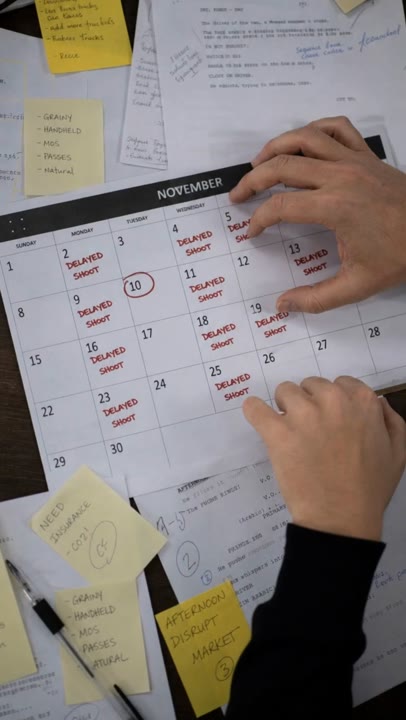
If you supply no screen recording, a SaaS demo ad has no product shots in it at all, and Lollipop treats that as the correct output rather than a degraded one. The argument then runs over close shots of the manual work the software replaces. The script agent is told to state that plainly in its rationale, so you hear it in the chat rather than discovering it in the finished cut.
How long does one run?
Its own default length is 30 seconds, and the allowed lengths it offers are 30, 45, 60 and 90.
Scripts are written to about three spoken words per second, so a format’s length is also its word budget. With no face to cut back to, more of that budget is spent on the screen, and a recorded moment gets the longer end of the cut because a screen the viewer cannot read proves nothing.
Where this one is weaker than it looks
- The closing ask lands on a card. An on-screen line can only sit on a generated shot, never on your recorded footage, so with nobody on camera the shot that carries the ask is the flat card this format closes on. That is the second reason the last frame is a card rather than a person, and it is a constraint rather than a preference.
- No specific arrives that you did not supply. A SaaS demo script is instructed never to manufacture a number, a customer name, a logo, a case study, a certification or a pricing tier, because in business software a fabricated specific is a claim somebody’s procurement team checks.
- There is no face to buy the first second with. The ad opens on the recording or on one close shot of the friction. A dull recording is a dull opening, and nothing on camera exists to rescue it.
- The generated half is deliberately plain. Close, documentary and slightly imperfect is the target. If what you pictured between the screens was glossy lifestyle B-roll, this format will not make it.
When somebody can front it after all
A face is worth having when there is a credible one available, and the Presenter Product Demo opens and closes on that face while your recording runs underneath it. When the ad is a sales argument rather than a walkthrough, the VSL format drives a relentless voiceover over a fast montage of graphs, callouts and hero shots. Both sit in the format library, where each one carries a real generated ad you can watch first.
Working the other way round, from what you sell rather than from what you want to film, what an ad generator is allowed to show of your software covers the decision this format is one answer to.
Start a Voiceover Product Demo ad now.
Make a voiceover demo adDescribe the product in a chat. Lollipop writes the script, casts the actor and renders every shot, and you can open the canvas to change any of it.